As an Amazon Associate this site earns from qualifying purchases.
Specifications
| Product | Price | Max wattage | Heat settings | Thermostat | Tip-over | Overheat | Certification | Child lock | Remote/Timer |
|---|---|---|---|---|---|---|---|---|---|
| DREO Space Heater, Portable Electric Heaters for Indoor Use with Thermostat and Remote, 2024 Upgraded | Check price on Amazon | 1500W | Power heat, ECO, Fan Only (5 modes) | Yes, 41–95℉ in 1℉ steps | Yes, tilt-detection sensor | Yes | ETL | Yes | Remote + 12-hour timer |
| DREO Space Heater 1500W, 60° Adjustable Tilt | Check price on Amazon | 1500W | 3 modes | Yes, 41–95℉ in 1℉ steps | Yes, advanced | Yes | ETL | Not stated | Remote |
| GiveBest Space Heater, Portable Space Heaters for Indoor Use | Check price on Amazon | 1500W | 1500W / 750W / fan | Yes, automatic | Yes, with audible beep | Yes, auto shut-off | Not stated | Not stated | Not stated |
| Amazon Basics Ceramic Space Heater | Check price on Amazon | 1500W | High 1500W / Low 900W / Fan Only | Yes | Yes | Yes | Not stated | Not stated | Not stated |
| Space Heater, 1500W Electric Heaters Indoor Portable with Thermostat (Aikoper) | Check price on Amazon | 1500W | Low / Medium / High / fan-only | Yes, adjustable dial | Yes, smart tip-over switch | Yes | Not stated | Not stated | Not stated |
| Space Heater, AUBKN Small Portable Electric Heaters for Indoor Use | Check price on Amazon | 1500W | 700W / 1000W / 1500W (5 modes) | Yes, built-in | Yes, auto shut-off | Yes | ETL | Not stated | Remote + 12-hour timer |
Quick answer: A space heater is safe when it has tip-over shutoff, overheat protection, a real thermostat, and a third-party safety certification like ETL — and when you give it three feet of clear space, plug it directly into a wall outlet (never a power strip or extension cord), and switch it off when you leave the room or go to sleep. If kids or pets are in the house, prioritize models with a child lock, a cool-to-touch ceramic body, and automatic-restart-free tip-over cutoffs. The heater matters less than where you put it.
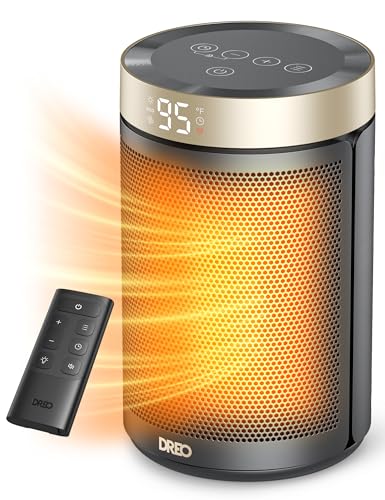
- Powerful heat that fits everywhere: DREO space heaters for indoor combines Hyperamics 1500W advanced PTC system with a new heat funnel design to deliver heat within seconds and
- Unbreakable safety:DREO goes beyond the unexpected to deliver peace of mind with every room heater. The innovative tilt-detection sensor improves accuracy and reliability for
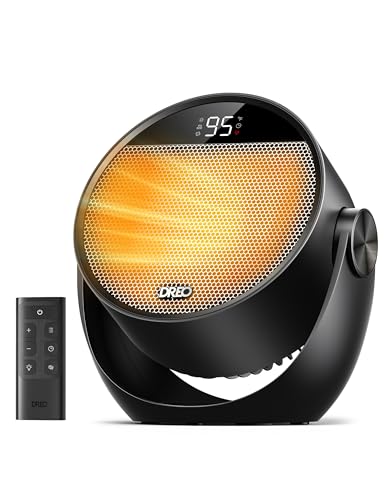
- Vertical Tilt for Full-Body Warmth: Manually tilt the portable heater from 0°-20°-40°-60°, enjoying warmth from your head to toe. Place it on a table or floor, heating exactly
- Fast Warm Air Delivery: Powered by 1500W Hyperamics tech, this space heater for indoor use delivers warmth in just 2 seconds and produces 53.9% more heated air than traditional
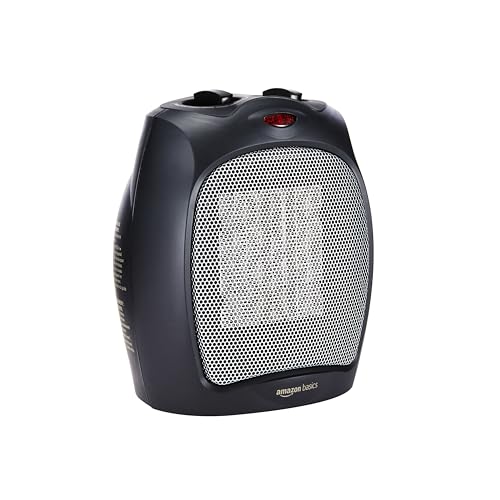
- CUSTOMIZABLE HEATING OPTIONS: Choose from three settings to suit your needs - High (1500W), Low (900W), or Fan Only for air circulation without heat
- COMPACT & PORTABLE: Weighing just 3 lbs and sized at 7.5“L x 6.3”W x 9.5“H, this space heater is easy to move and perfect for your Home, Office
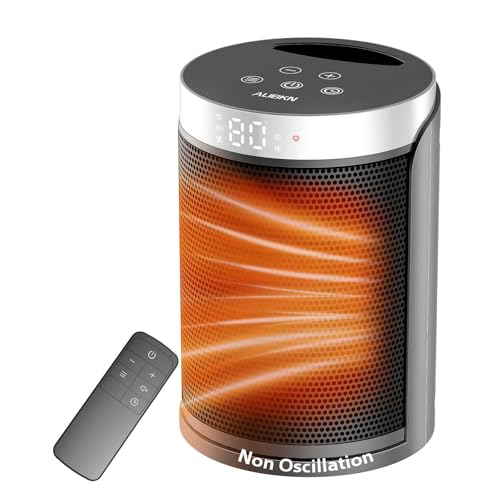
- Adjustable Heating Settings: This portable heater offers three heating settings, including 700W, 1000W, and 1500W, allowing you to customize the temperature based on your needs
- Built-in Thermostat & Remote Control: This heaters for indoor use comes with a built-in thermostat that automatically maintains the desired temperature. The included remote
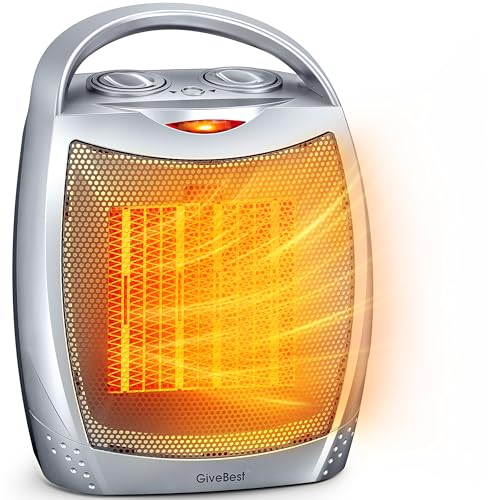
- 2 in 1 heater fan: This ceramic heater offers dual heating modes (1500W/750W) plus a cool air fan, making it ideal for both winter and summer. With automatic thermostat control
- Multi-protection safety system: These heaters are made of V0 flame retardant material avoiding any fire hazard. Automatic safety shut-off system will shut the heater off when the
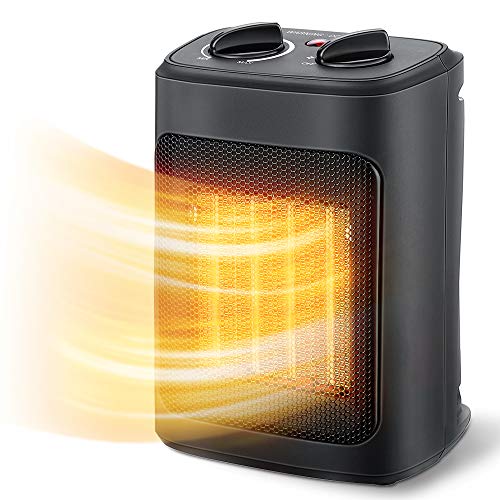
- GET NICE & TOASTY FASTER: The advanced PTC ceraming heating technology combined with the ultra-efficient fan will heat up any space faster and distribute the heat more evenly
- CUT DOWN ON ELECTRIC BILLS without having to freeze. Our energy-efficient interior space heater features 3 different heat settings (LOW, MEDIUM, HIGH) as well as a fan-only mode
The safety features that actually matter
If you're scanning listings and trying to figure out which safety bullet points are real and which are marketing, here's the short list worth filtering on:
- Tip-over protection — cuts power when the unit is knocked over. Non-negotiable with kids, dogs, or a cluttered floor.
- Overheat protection — shuts the heater down if internal temps climb past spec, usually because a vent got blocked.
- A thermostat, not just heat settings — a thermostat cycles the element off when the room hits temperature. A "low/high" switch alone just runs forever.
- Flame-retardant housing — several listings below specify V0-rated material, which is the strictest UL 94 flammability class.
- Third-party certification — ETL (or UL) means an independent lab tested it. Uncertified heaters are a hard pass.
- Child lock — stops a toddler from cranking it to 1500W or restarting it after you switched it off.
The rules that prevent almost every space heater incident
Plug it straight into the wall. No extension cords, no power strips, no surge protectors, no timer plugs. A 1500W heater pulls about 12.5 amps continuously, and most cords and strips aren't built for that sustained load. This single rule prevents more fires than any feature on any heater.
Finding the right how to use space heater safely comes down to matching the features to how you will actually use it.
Give it three feet in every direction. Bedding, curtains, laundry piles, sofa skirts, paper, the dog bed. Three feet, all sides, including above it.
Hard floor, level surface. Tip-over protection is a backstop, not a plan. Don't set a heater on carpet, on a rug edge, or on anything soft that can block the intake underneath.
Don't run it while you sleep or when you're out. Even with a 12-hour timer available on the DREO 2024 Upgraded model and the AUBKN, use the timer to shorten the run, not to justify leaving it unattended.
Keep it out of the bathroom unless it's rated for damp rooms. The Amazon Basics Ceramic Space Heater listing explicitly says not for bathrooms, laundry rooms, or other high-moisture areas — treat that as the default assumption for any heater that doesn't say otherwise.
Check the cord and plug monthly. Warm plug, discolored outlet, or a cracked cord means stop using it now, not next week.
Safe heaters for homes with children
Households with small kids need three extra things beyond the basics.
First, a child lock — the DREO Space Heater, Portable Electric Heaters for Indoor Use with Thermostat and Remote, 2024 Upgraded lists one, along with a memory function and a mute option. That's the clearest child-focused feature set in this group.
Second, ceramic PTC heating rather than exposed elements or oil-filled radiators. Every heater here uses PTC ceramic, which means no glowing coil and a self-limiting element temperature. Oil radiators have exposed hot surfaces that stay dangerous for a long time after shutoff.
Third, placement discipline. Mount the habit, not the hope: heater in a corner, cord routed against the wall, and a standing rule that the heater room is off-limits to unsupervised toddlers. The GiveBest Space Heater, Portable Space Heaters for Indoor Use adds a loud beep on tip-over, which is genuinely useful as an alert that something just happened in the next room.
Who a compact 1500W ceramic heater is for
- Anyone heating one room they're actually in — a home office, a cold bedroom, a chilly corner of a living room — instead of running central heat for the whole house.
- Renters who can't touch the HVAC system.
- People who want fast, targeted warmth. PTC ceramic heats within seconds rather than the slow ramp of an oil-filled radiator.
- Households that need a fan in summer too. The GiveBest, Amazon Basics, and Aikoper models all include a fan-only mode.
Who should skip a space heater entirely
- Anyone who'd be running it 8+ hours a day, every day. At 1500W that's expensive electricity, and it puts a heavy sustained load on your wiring. If your whole house is cold, fix the heating or the insulation.
- Homes on old or unknown wiring. If breakers already trip or outlets feel warm, get an electrician before you add a 12.5-amp load.
- Bathrooms and laundry rooms, unless the specific model is rated for it.
- Anyone who wants to leave heat running unattended overnight. No space heater is designed for that, and the safety features don't change the answer.
- Large open spaces. The GiveBest is rated for up to 200 square feet; that's a realistic ceiling for this class of heater generally.
Honest trade-offs
Cheap heaters and expensive heaters here all draw the same 1500W and produce the same amount of heat. What you pay more for is control and quiet, not warmth.
The Aikoper at $22.18 and the Amazon Basics at $23.88 give you a dial or a switch. That's it — no remote, no timer, no digital target temperature. They work, but you get up to adjust them.
Step up to the DREO models and you're paying for a stated 34dB brushless DC motor, 1℉ thermostat increments across 41–95℉, and a remote. Whether that's worth $16–$27 more depends entirely on whether the heater lives in a bedroom (where noise matters a lot) or a garage workshop (where it doesn't).
The DREO 60° Adjustable Tilt model is the outlier at $49.99: the manual 0°–60° tilt is genuinely useful on a desk, where a fixed heater blows at your shins and nothing else. It's a niche feature that's either exactly what you need or completely irrelevant.
The certification gap is worth noting honestly. The DREO models and the AUBKN state ETL certification. The GiveBest, Amazon Basics, and Aikoper listings describe safety systems but don't state a certification in the data available — verify that on the listing yourself before buying.
What to check on the listing before you buy
Listings change constantly, so confirm these yourself rather than trusting any article:
- Current price — all six of these sit in a narrow band and shift with promotions. The gap between them may be smaller or larger than stated here.
- Variant — color and size options can have different specs and different prices on the same listing page. Confirm you're looking at the one you want.
- Certification mark — look for ETL or UL stated on the listing itself, not just in a review.
- Warranty — the AUBKN listing states 30-day returns and a 12-month warranty; check what the others actually offer.
- Dimensions — the Amazon Basics is listed at 7.52"D x 6.34"W x 9.45"H and about 3 lbs. Measure your shelf or desk before ordering.
- Reviews — go read them yourself, specifically filtering for mentions of the thermostat behavior and cord temperature. Those are the two things that reveal a bad unit.
Alternatives worth considering
DREO Space Heater 1500W, 60° Adjustable Tilt — consider instead if…
You're heating yourself at a desk rather than heating a room. The DREO Space Heater 1500W, 60° Adjustable Tilt tilts manually through 0°, 20°, 40°, and 60°, so it can aim up at you from the floor or down from a tabletop. It carries the same 41–95℉ thermostat, 34dB brushless DC motor, ETL certification, V0 flame-retardant materials, and safety plug as its sibling, and it's listed with 8 safety protections at $49.99.
GiveBest Space Heater, Portable Space Heaters for Indoor Use — consider instead if…
You want the audible tip-over alert and a dual-purpose unit. The GiveBest Space Heater, Portable Space Heaters for Indoor Use beeps loudly when knocked over and auto-restarts once uprighted, runs at 1500W or 750W plus a cool-air fan mode, uses V0 flame-retardant and upgraded ABS housing, and is rated to heat up to 200 square feet. $25.98, with a six-foot cord and a built-in handle.
Amazon Basics Ceramic Space Heater — consider instead if…
You want the smallest, lightest option and don't need a remote. The Amazon Basics Ceramic Space Heater weighs about 3 lbs at 7.52"D x 6.34"W x 9.45"H, offers High (1500W), Low (900W), and Fan Only, and includes tip-over protection, overheat protection, and a power indicator light. Rated at 43dB and $23.88. Note its listing explicitly excludes bathrooms and laundry rooms.
Space Heater, 1500W Electric Heaters Indoor Portable with Thermostat — consider instead if…
Budget is the deciding factor. The Aikoper Space Heater, 1500W Electric Heaters Indoor Portable with Thermostat is $22.18 and covers the fundamentals: PTC ceramic heating, Low/Medium/High plus fan-only, an adjustable thermostat dial, an overheat protection sensor, a smart tip-over switch, and a built-in handle.
Space Heater, AUBKN Small Portable Electric Heaters for Indoor Use — consider instead if…
You want a remote and a timer without paying DREO prices. The AUBKN Small Portable Electric Heaters for Indoor Use runs $27.99 with 700W/1000W/1500W settings, a built-in thermostat, a 12-hour timer, ETL certification, overheat protection, and tip-over auto shut-off. The remote needs 2 AAA batteries, not included, and the listing states 30-day returns plus a 12-month warranty.
Our reference model for a low-hassle safe setup
The DREO Space Heater, Portable Electric Heaters for Indoor Use with Thermostat and Remote, 2024 Upgraded at $39.99 has the fullest safety spec here: a tilt-detection sensor for tip-over, overheat protection, V0 flame-retardant materials, a safety plug, ETL certification, and — the one that matters in a house with kids — a child lock. It also carries a 12-hour timer, five modes including ECO and Fan Only, a 41–95℉ thermostat in 1℉ steps, and a stated 34dB from its brushless DC motor.
FAQ
Can I leave a space heater on overnight? Don't. Even a heater with tip-over cutoff, overheat protection, and a timer isn't designed for unattended operation. If a room is too cold to sleep in without one, run the heater to warm the room before bed, then turn it off — better insulation or a heavier duvet is the real fix.
Is a power strip really that dangerous? Yes. A 1500W heater draws roughly 12.5 amps continuously. Most power strips, surge protectors, and household extension cords are rated for intermittent loads and will heat up under sustained draw. Wall outlet only, and ideally one that isn't already sharing a circuit with other high-draw appliances.
What safety features should I look for in a tower heater? The same core set as any electric heater: tip-over protection, overheat shutoff, a real thermostat rather than just heat levels, flame-retardant housing, and ETL or UL certification. Tower shapes are taller and narrower, so tip-over protection matters more, not less — check that it's explicitly listed, not implied.
Does the child lock actually help, or is it a gimmick? It helps. It prevents a child from changing the setting or restarting the unit after you've switched it off, which is a real failure mode in households with toddlers. Among the heaters here, only the DREO Space Heater, Portable Electric Heaters for Indoor Use with Thermostat and Remote, 2024 Upgraded lists one — but it's a supplement to placement discipline, not a replacement for it.
Related guides
- Best home cooling, heating and fans - ceiling fans, tower fans, space heaters, misting fans, portable air conditioners, window air conditioners for Small Business Owners
- Tower Fan Buyer's Guide: What to Look for Before You Buy
- The Best Portable Air Conditioners for 2026
Key Takeaways
- Choosing the right how to use space heater safely means matching the key features to your specific needs and budget
- Read real customer reviews and check the return policy before you commit
- Compare value across models — the priciest option is not always the best fit