As an Amazon Associate this site earns from qualifying purchases.
Side-by-side: the Midea U lineup
| Model | BTU | Room size | Noise as low as | Claimed energy savings | Price |
|---|---|---|---|---|---|
| Midea 6,000 BTU U Shaped | 6,000 | 250 sq ft | 32 dBA | 37%+ | Check price on Amazon |
| Midea 8,000 BTU U Shaped (Updated) | 8,000 | 350 sq ft | 32 dBA | 35%+ | Check price on Amazon |
| Midea 8,000 BTU U Shaped | 8,000 | 350 sq ft | 32 dBA | 37%+ | Check price on Amazon |
| Midea 10,000 BTU U Shaped (Updated) | 10,000 | 450 sq ft | 32 dBA | 35%+ | Check price on Amazon |
| Midea 10,000 BTU U Shaped | 10,000 | 450 sq ft | 32 dBA | 37%+ | Check price on Amazon |
| Midea 12,000 BTU U Shaped | 12,000 | 550 sq ft | 32 dBA | 37%+ | Check price on Amazon |
Quick answer: If your window is a standard single- or double-hung unit between 22" and 36" wide and noise is your main complaint, the Midea U-shaped inverter line is built specifically around that problem — the saddle shape puts the compressor outside the window plane and the sash closes through the middle of the unit. If you need a shape that drops into a non-standard opening, a through-wall sleeve, or a window that can't take a saddle bracket, LG's Dual Inverter models are the conventional-box alternative most people cross-shop, and you should pull the exact spec sheet for the model number you're looking at before deciding.
One thing to be upfront about: the verified listing data behind this page covers the Midea U line only. Everything below about the Midea units comes from their current product listings. For LG, I'll tell you what to compare and where the two designs genuinely differ in kind — but I'm not going to quote you LG numbers I can't stand behind. Go read LG's own spec sheet and the customer reviews on the listing you're considering; that's the honest version of this comparison.
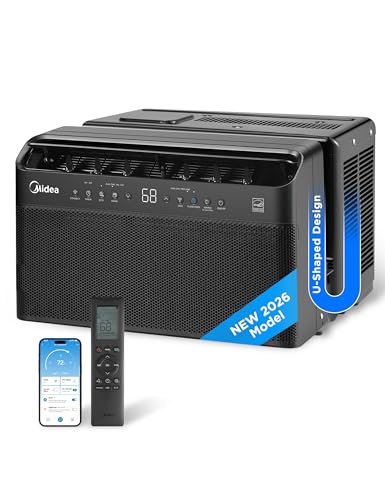
- Creates a Peaceful Home Environment – The innovative U-shaped design creates open window flexibility and helps block outside noise when closed, while Midea Inverter technology
- ENERGY-SAVING PERFORMANCE – This Energy Star certified AC unit delivers airflow you can feel up to 20 feet away and cools rooms up to 250 sq. ft. Midea’s Inverter technology
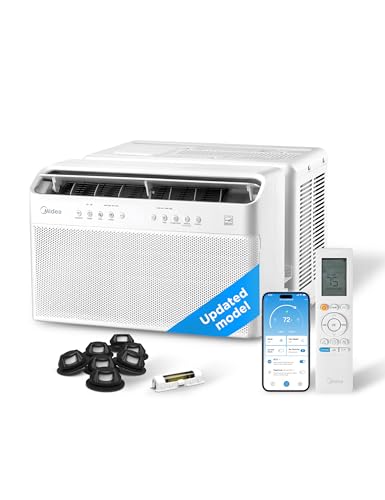
- ULTRA QUIET - The U-shape design of Midea U Smart Inverter air conditioner uses your window to block noise outside. The highly-efficient inverter system warrants ultra-low noise
- MORE THAN 37% ENERGY SAVINGS - With the advanced DC Inverter technology, Midea U window air conditioner achieves over 35% energy savings compared to other traditional units. It is
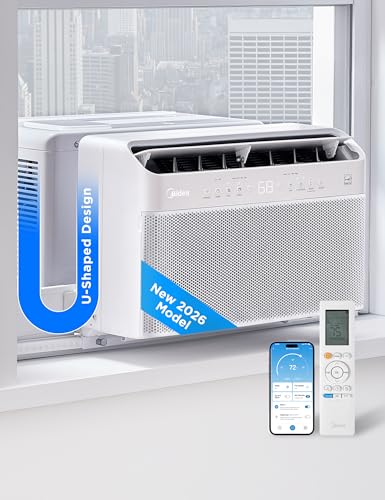
- ULTRA QUIET - The U-shape design of Midea U Smart Inverter AC uses your window to block noise outside. The highly-efficient inverter system warrants ultra-low noise and vibration
- MORE THAN 37% ENERGY SAVINGS - With the advanced DC Inverter technology, Midea U window air conditioner achieves over 37% energy savings compared to other traditional units. It is
The real difference is shape, not marketing
"Dual inverter" and "smart inverter" are both describing the same underlying idea: a variable-speed compressor that ramps up and down instead of slamming on and off. Any inverter window AC — Midea's or LG's — will hold temperature more steadily and run quieter at part load than an old-school single-speed unit. That part is close to a wash, and choosing between brands on the word "dual" is choosing on a marketing term.
Finding the right midea u inverter vs lg dual inverter window ac comes down to matching the features to how you will actually use it.
What isn't a wash is the physical form. The Midea U is a saddle: the window sash closes down into a notch in the middle of the chassis, which means the noisy half of the machine sits on the outdoor side of the glass. That's the mechanism behind the quiet rating, and it's also why the window still opens with the unit installed. A conventional box AC — LG's Dual Inverter models included — sits entirely in the opening, seals the window shut, and puts the whole compressor inside the same plane as the glass.
That difference drives everything else. Saddle units need a compatible window and a bracket that sits on the sill. Box units are more forgiving about where they go but block the window entirely.
All six fit single-hung or double-hung windows 22"–36" wide with a minimum height of 13.75", install on an included quick-snap bracket, are Wi-Fi enabled through the SmartHome app on iOS and Android, work with Alexa and Google Assistant, and include an anti-theft mechanism that locks the window when it's closed. Midea states the U line was the first window AC to earn ENERGY STAR certification.
Midea 6,000 BTU U Shaped Window Air Conditioner, Cools up to 250 Sq Ft — the small-bedroom entry point
At $349.00 for 250 sq ft, this is the cheapest way into the saddle design. It carries the same 32 dBA low-end rating and the same Wi-Fi, Alexa and Google Assistant control as the bigger units, so you're not paying for quiet or smarts twice. Buy this one only if your room genuinely is small — undersizing an AC means it runs flat out and never gets the part-load benefit an inverter exists to deliver.
Midea 8,000 BTU U Shaped Smart Inverter Window Air Conditioner - Cools 350 Sq Ft, Ultra Quiet with Open Window Flexibility - Alexa/Google Assistant Compatible - 37% Energy Savings, Remote (Updated) — the one with published draw figures
This is the model with actual electrical detail in the listing: 710 cooling watts, 8.78 rated cooling amps (AHAM), airflow of 215/150 CFM roomside on high and low, and R32 refrigerant. It's rated 10x quieter than traditional units versus the 9x claim on the non-updated models, and the bullets state over 35% energy savings. At $384.22 it also happens to be the cheapest 8,000 BTU option here.
Midea 8,000 BTU U Shaped Window Air Conditioner, Cools up to 350 Sq Ft — the straightforward 350 sq ft pick
Same 350 sq ft coverage, $399.99, with the 37%+ energy savings and 9x quieter claims. If both 8,000 BTU units are in stock, compare them directly — this one costs about $16 more than the updated version and its listing doesn't publish the watt and CFM figures.
Midea 8,000 BTU U Shaped Smart Inverter Window Air Conditioner - Cools 350 Sq Ft, Ultra Quiet with Open Window Flexibility - Alexa/Google Assistant Compatible - 37% Energy Savings, Remote (Updated) — most cooling per dollar
$399.99 for 450 sq ft is the strongest BTU-per-dollar figure in this lineup. The listing specifies 890 cooling watts, 9.97 rated cooling amps (AHAM), electronic control type, R32 refrigerant, a 10x quieter claim and over 35% energy savings.
Midea 10,000 BTU U Shaped Window Air Conditioner, Cools up to 450 Sq Ft — the 37% savings 450 sq ft version
Identical 450 sq ft coverage at $429.99, carrying the 37%+ energy savings and 9x quieter figures. The $30 gap over the updated 10,000 BTU model is worth a second look before you click buy.
Midea 12,000 BTU U Shaped Window Air Conditioner, Cools up to 550 Sq Ft — for open-plan and studio spaces
The top of the line at $479.99 and 550 sq ft, with 37%+ claimed savings and the same 32 dBA floor. This is the one for a studio apartment or a living room that opens into a kitchen. Confirm your sill can take the weight and that your window meets the 22"–36" width and 13.75" minimum height requirement.
The honest trade-offs
The saddle shape is a hard constraint. 22"–36" width, 13.75" minimum height, single-hung or double-hung only. Casement windows, sliders, through-wall sleeves and narrow city windows are all disqualifying. A conventional box unit — which is what LG's Dual Inverter models are — has more room to maneuver here, and that alone decides the question for a lot of apartments.
"32 dBA" is a floor, not an average. That figure is the lowest fan and compressor speed, not what you hear when the unit is pulling a hot room down. Every inverter AC's quietest number is measured at its least demanding setting.
The savings percentages are comparisons to old equipment. "37% energy savings compared to other traditional units" is measured against single-speed window ACs, not against another inverter model. If you're comparing a Midea U to an LG Dual Inverter, that number tells you nothing useful — compare CEER ratings on the two spec sheets instead.
Installation is different, not necessarily easier. The quick-snap bracket has to be anchored properly, and the unit hangs partly outside the building. If you're on an upper floor, read the bracket instructions before ordering.
Check the reviews yourself. Both brands have long listing histories with a lot of owner feedback about installation, drainage and long-term reliability. Read the recent reviews on the exact model you're considering — that's the fastest way to catch a specific unit's quirks.
FAQ
Is Midea better than LG for window air conditioners? Neither is universally better. The decision usually comes down to window compatibility and whether you want the sash to still open. If your window fits a saddle unit and noise is the priority, Midea's U design is built around exactly that. If your opening won't take a saddle, LG's conventional inverter boxes are the practical choice — check the specific model's dimensions and CEER against the Midea numbers in the table above.
Is "dual inverter" better than Midea's "smart inverter"? They're brand names for variable-speed compressor control. Both avoid the on/off cycling of older units. Don't pick on the label — compare CEER, dBA ratings measured the same way, and BTU-to-room-size fit.
Can I install a Midea U in a sliding or casement window? No. Every Midea U model listed here specifies single-hung or double-hung windows, 22"–36" wide, with a minimum height of 13.75". A conventional box unit or a portable AC is the route for other window types.
Which BTU size should I get? Match the room, don't oversize. The listings map 6,000 BTU to 250 sq ft, 8,000 to 350 sq ft, 10,000 to 450 sq ft and 12,000 to 550 sq ft. An oversized unit cools fast, shuts down, and leaves the room clammy — which defeats the reason you bought an inverter.
Related guides
- Common Reasons Best home cooling, heating and fans - ceiling fans, tower fans, space heaters, misting fans, portable air conditioners, window air conditioners Gets Denied
- Best home cooling, heating and fans - ceiling fans, tower fans, space heaters, misting fans, portable air conditioners, window air conditioners for Small Business Owners
- Best home cooling, heating and fans - ceiling fans, tower fans, space heaters, misting fans, portable air conditioners, window air conditioners After Recent Issues
Key Takeaways
- Choosing the right midea u inverter vs lg dual inverter window ac means matching the key features to your specific needs and budget
- Read real customer reviews and check the return policy before you commit
- Compare value across models — the priciest option is not always the best fit